

Create a phone-powered HTTP or SOCKS5 proxy for controlled mobile-network testing
A connected Android phone can act as a Localtonet proxy exit node without requiring root access or inbound router port forwarding. This guide explains how to link the phone to your account, create an authenticated HTTP or SOCKS5 endpoint, route approved test traffic through the device, and request an IP refresh through airplane-mode automation where the Android device supports it. Because carrier addressing and Android permissions vary, rotation should be treated as a reconnection request rather than a guarantee that every attempt will produce a new public IP.
What is an Android mobile proxy?
An Android mobile proxy routes client traffic through a proxy service running on, or connected through, an Android device. With Localtonet, the phone establishes an outbound connection to a Localtonet relay server. The platform then provides a public host and port that an authorized client can use as an HTTP or SOCKS5 proxy endpoint. The connected phone acts as the exit node instead of forwarding traffic to a conventional local IP address and port.
When the phone is actually using cellular data, destination services generally observe the public address assigned through the mobile carrier's network. If the phone is using ordinary Wi-Fi, the observed exit address may instead belong to that Wi-Fi network. Confirm the phone's active network and observed public address before relying on the setup for carrier-specific testing.
Mobile carrier addresses can be useful for legitimate quality assurance, localization checks, ad verification, and testing services you own or are authorized to assess. A mobile address does not make traffic undetectable, anonymous, or exempt from a website's rules. Services may evaluate account history, cookies, request patterns, client fingerprints, rate limits, and other signals in addition to the source IP address.
Do not use a mobile proxy to evade access controls, operate unauthorized accounts, conceal abuse, or ignore a service's terms. Apply least privilege, enable available authentication, limit who receives the endpoint, and stop the proxy when it is no longer needed. Cellular traffic can also consume a metered data allowance, so monitor usage and check the mobile carrier's applicable terms.
How the Localtonet connection works
The Localtonet Android app connects outward to Localtonet infrastructure. This avoids the need for inbound router port forwarding and can work when the phone is behind carrier-grade NAT. Creating the proxy configuration does not by itself make the endpoint active. The selected phone must remain connected, and the proxy must be started from the dashboard. Stopping the tunnel or disconnecting the phone makes the endpoint unavailable.
| Component | Purpose | Important limitation |
|---|---|---|
| Android app | Connects the phone to Localtonet and supplies the device's network path. | The app and device must remain connected while the proxy is in use. |
| Device AuthToken | Identifies the client device associated with the account. | It is sensitive and must not be published, guessed, or placed in screenshots. |
| Relay server | Provides the public proxy host and port through Localtonet infrastructure. | Select only a currently available server or region shown in the dashboard. |
| Proxy credentials | Restrict use of the public endpoint when authentication is configured. | Weak, reused, or publicly shared credentials can expose the phone's connection to misuse. |
How to configure the Android mobile proxy
Install the Android application
Install the official Localtonet app from Google Play on the phone that will provide the proxy network path. Keep Android and the application updated to versions supported by the device.
Obtain the device AuthToken securely
Sign in to Localtonet and obtain the device-specific AuthToken from the current token area in the dashboard. Do not publish the token, send it through an unsecured channel, or include it in a screenshot.
Connect the phone
Open the Android app and authenticate it with the correct device token. Wait until the phone appears as connected in the dashboard before continuing. If Android applies battery or background restrictions, follow the device manufacturer's controls so the app is not suspended during an authorized test session.
Open the Proxy Server page
Go to the authenticated Localtonet Proxy Server page. If you are not signed in, the page will first display the account login screen.
Select the connected phone and relay
Choose the AuthToken for the connected Android phone and select an available Localtonet relay server or region displayed in the dashboard. Availability can vary, so do not rely on a hardcoded server code from an old guide.
Choose HTTP or SOCKS5 and secure access
Select the proxy protocol supported by your client. Configure username and password protection when that option is available. Use unique credentials and provide them only to the people or systems that are authorized to use the phone's network connection.
Create and start the proxy
Create the proxy configuration, then press Start. Creation and activation are separate lifecycle actions. Copy the assigned public host, port, and configured credentials only after the proxy is running. Stop or delete the proxy when the session is complete.


Configure mobile IP rotation without root
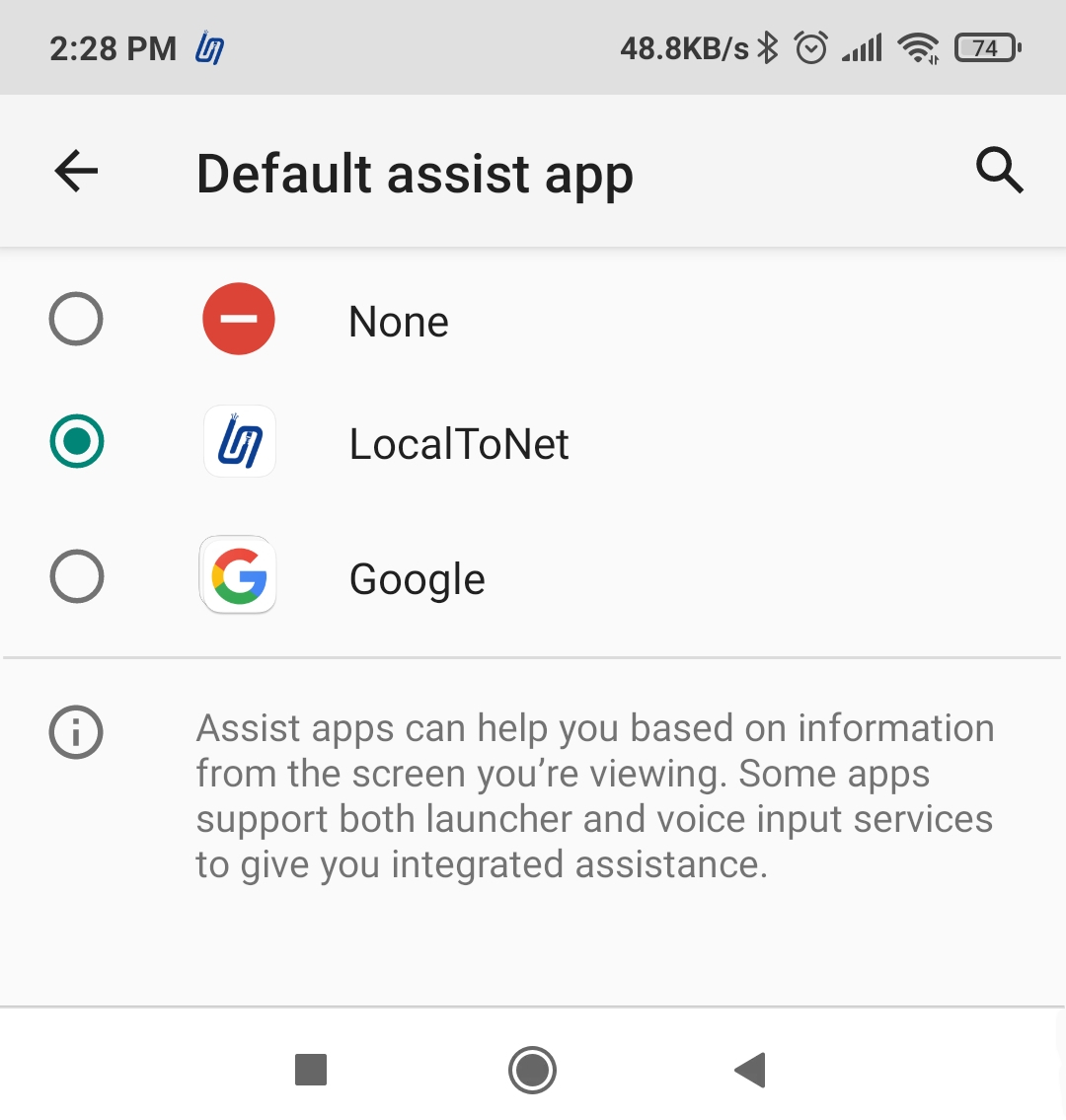
Localtonet's Android workflow can use airplane-mode automation to disconnect and reconnect the phone's mobile network. On supported non-root devices, the app may ask to become the default assistant so it can initiate the relevant system interaction. The exact permission screen and behavior depend on the Android version, device manufacturer, system policies, and app version. Follow the prompts shown by the current application rather than granting unrelated permissions described by an older screenshot.
If the current dashboard presents rotation intervals or a reset link, use them only after confirming that airplane-mode control works correctly on the phone. A reset interrupts active network sessions and may temporarily affect calls, messages, hotspot clients, or other applications. Schedule rotation between test jobs rather than during a transaction that requires connection continuity.
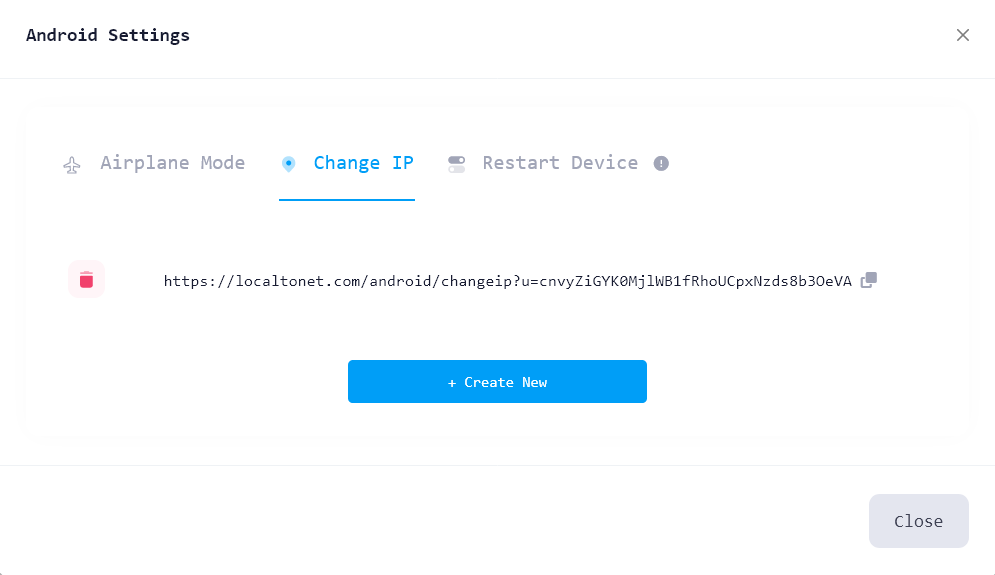
Airplane-mode toggling can cause the carrier to assign a different public address, but the carrier may return the same address or keep traffic behind the same shared gateway. It also does not move the phone to another country or guarantee a precise city. Verify the observed exit address after each reset instead of assuming rotation succeeded.
Connect an authorized client
After the proxy is started, the dashboard provides the public server hostname or IP address, port number, and any credentials you configured. Enter those values in a browser proxy extension, an operating system proxy setting, an HTTP client, or another application that explicitly supports the chosen protocol. Do not paste the endpoint or credentials into public issue trackers, shared screenshots, or client-side code delivered to untrusted users.
Choose HTTP when the client specifically supports an HTTP proxy. Choose SOCKS5 when the application supports SOCKS proxy configuration and you need protocol-independent TCP connection handling. Do not assume that every SOCKS5 client or Localtonet proxy configuration supports UDP relay. UDP behavior is not established by the supplied primary product documentation, so verify it in the current dashboard and with the particular client before depending on it.
Before beginning a test, confirm that the phone is using the intended cellular connection and that the destination observes the expected carrier address. If Wi-Fi is active, traffic may follow the Wi-Fi connection instead. Also confirm that DNS behavior and proxy support match the client application, since those details can differ between HTTP and SOCKS5 clients.
Appropriate mobile proxy use cases
Frequently asked questions
Do I need root to create a Localtonet Android proxy?
No. The Android phone-as-proxy workflow is available without root. Automated airplane-mode interaction may require selecting Localtonet as the default assistant, and compatibility can vary by Android version and device manufacturer.
Will airplane mode always give the phone a new public IP?
No. Toggling airplane mode requests a network reconnection, but address assignment is controlled by the carrier. The same public address may be assigned again, especially when subscribers share carrier-grade NAT infrastructure.
Which proxy protocols are supported?
Localtonet documents HTTP and SOCKS5 proxy endpoints. Select the protocol that the connecting application supports. Verify any protocol-specific requirement, including UDP behavior, against the current dashboard and client documentation.
Does the proxy always use a mobile carrier IP?
Only when the phone's active exit path uses cellular data. If the phone routes through Wi-Fi, the destination may see the Wi-Fi network's public address. Verify the active connection and observed exit IP before testing.
Is the proxy available after I create it?
Not until it is started. The selected Android device must be connected and the proxy must be running. Stopping the proxy or disconnecting the phone makes the public endpoint unavailable.
How should I protect the public proxy endpoint?
Configure available username and password protection, use unique credentials, restrict distribution of the endpoint, protect the device AuthToken, monitor cellular usage, and stop or delete the proxy when it is no longer required.
Start your authorized mobile proxy test
Connect an Android phone, select an available relay, secure the endpoint, and start an HTTP or SOCKS5 proxy for an approved testing workflow.
Open Proxy Server →